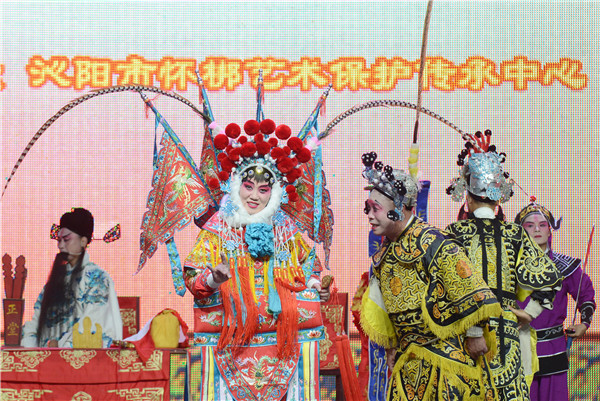
Liyuan Opera
Introduction
Liyuan Opera, also known as Pear Orchard Opera, is a traditional form of Chinese opera that originated in Quanzhou, Fujian province during the 11th century. This opera is recognized for its role as a "living fossil" due to its preservation of many age-old dramas, musical compositions, and stage idioms from Southern Local Operas of the Song, Yuan, and Ming Dynasties. Its historical and cultural significance stems from its ability to maintain the linguistic, musical, and performative elements of ancient Chinese opera, making it an invaluable cultural heritage. Liyuan Opera was included in the first batch of national intangible cultural heritage list in 2006.
History
Origins
The roots of Liyuan Opera can be traced back to the Song Dynasty (960-1279), around the 11th century, in Quanzhou, Fujian province. This region, known for its vibrant cultural exchanges due to its status as a trading hub along the ancient Maritime Silk Road, provided a fertile ground for the development of unique artistic expressions. As a result, Liyuan Opera emerged, reflecting the local customs and artistic sensibilities of southern Fujian people.
Evolution
Throughout the centuries, Liyuan Opera has experienced various stages of evolution, adapting to changing cultural landscapes while maintaining its core traditions. The Ming Dynasty (1368-1644) saw a flourishing of operatic arts, and Liyuan Opera was no exception, with its repertoire expanding to include numerous historical and folklore themes. In the modern era, efforts to preserve and promote Liyuan Opera have intensified, particularly with the founding of the Liyuan Opera Experimental Troupe of Fujian Province in 1953. This troupe has been instrumental in reviving and developing ancient plays while creating modern adaptations that resonate with contemporary audiences.
Characteristics
Musical Elements
The music of Liyuan Opera is characterized by its intricate melodic structures and the use of traditional Chinese instruments. The operatic compositions often employ pentatonic scales, characteristic of Chinese music, along with an elaborate system of melodies and rhythms that dictate the flow of the performance. Instruments such as the erhu (a two-stringed fiddle), pipa (a four-stringed lute), and various percussion instruments play a vital role in creating the opera’s atmospheric and emotive soundscape. The vocal techniques used in Liyuan Opera are equally complex, requiring performers to master a range of pitches and tones that convey the emotions and narratives of their characters.
Costume and Makeup
The visual spectacle of Liyuan Opera is significantly enhanced by its elaborate costumes and makeup, which are vital in distinguishing characters and denoting their roles and statuses. Costumes are often vibrant and heavily embroidered, with different colors and styles reflecting the character's traits and the setting of the story. Makeup in Liyuan Opera is an art form in itself, with specific patterns and colors used to symbolize various character attributes such as virtue, villainy, or supernatural power. This attention to visual detail not only serves an aesthetic purpose but also aids in storytelling, conveying complex narratives through visual cues.
Performance Techniques
Liyuan Opera is renowned for its unique performance techniques, which include stylized movements, gestures, and expressions that are integral to the storytelling process. Performers undergo rigorous training to perfect these techniques, which are passed down through generations. The choreography in Liyuan performances is precise and deliberate, with each movement having specific meaning and contributing to the narrative. Additionally, performers often engage in acrobatic feats, adding a dynamic physical element to the opera. These techniques reflect the opera's rich history and cultural significance, preserving the traditional performing arts of southern Fujian while maintaining a connection to the cultural roots of the region.
Notable Performers
Over the years, Liyuan Opera has produced a multitude of notable performers who have significantly contributed to its development and preservation. Among these artists are Wu Jieqiu, Wang Renjie, and Su Yanshi, who have been instrumental in popularizing Liyuan Opera both locally and internationally. Zeng Jingping, a young actress from the Liyuan Opera Experimental Troupe, has achieved remarkable success, becoming the first in Fujian to win prestigious awards such as the National Drama Plum Blossom Award. These performers, along with others like Cai Yazhi, Su Wushui, and Li Swenzhang, have played a crucial role in keeping the traditions of Liyuan Opera alive through their dedication to the art form and their innovative performances.
Influence and Legacy
Cultural Significance
Liyuan Opera holds profound cultural significance within China, particularly in the Fujian province, where it originated. As a "living fossil," it offers invaluable insights into the traditional operatic forms of ancient China, preserving linguistic, musical, and performative elements that have been lost in other regions. Its cultural importance is recognized through its inclusion as a national intangible cultural heritage item, reflecting its role in maintaining regional cultural identity and heritage. Liyuan Opera serves as a cultural bridge, promoting understanding and appreciation of Chinese operatic arts both domestically and internationally.
Contemporary Developments
In recent years, Liyuan Opera has seen various contemporary developments aimed at revitalizing the art form and engaging new audiences. These efforts include the creation of new operatic works that blend traditional themes with modern narratives, as evidenced by productions such as "Maple Forest in the Evening" and "Dongsheng and Miss Li." Such works have garnered critical acclaim and numerous awards, showcasing the adaptability and continued relevance of Liyuan Opera in modern times. Additionally, the Liyuan Opera Experimental Troupe has actively participated in international cultural exchanges, bringing the unique artistry of Liyuan Opera to audiences in Japan, Italy, and other countries and regions.
Preservation and Promotion
Efforts in China
Within China, significant efforts have been made to preserve and promote Liyuan Opera as an integral part of the nation's cultural heritage. Government support has been pivotal, with financial subsidies provided to provincial troupes to aid in the preservation and performance of traditional operas. Educational initiatives have also been established to train new generations of performers, ensuring the continuation of this cultural art form. Festivals and performances are regularly organized to celebrate Liyuan Opera, fostering greater awareness and appreciation among both locals and tourists.
International Outreach
Internationally, Liyuan Opera has gained recognition through cultural exchange programs and tours, enhancing its global profile. Collaborations with international artists and scholars have opened new avenues for its appreciation, while performances in foreign countries have introduced wider audiences to its unique artistry. Notably, the Liyuan Opera Experimental Troupe has actively engaged in cultural diplomacy, touring countries such as Japan, Italy, and Singapore, and establishing connections with overseas art troupes and scholars. Such efforts have strengthened the opera's international presence, promoting cross-cultural understanding and appreciation.








